Friday, 3 February 2012

Why You Shouldn't Stereotype.

Stereotyping is a human tendency that we all share to some extent. Following is a short article I once wrote about it. Feel free to give your feedback. :D 

Stereotyping? (< Click here to read)


Stereotyping?

Don't Underestimate Your Opponent.

Aerobic listening is a great skill to acquire. It is due to our poor listening most of the times that we tend to underestimate our opponent. Not a good idea at all. Check out the article I wrote about it given below. It might be useful for you.

Learning Not to Underestimate Your Opponent.  (< Click here to read)

Learning Not to Underestimate Your Opponent.  

What Makes a Suicide Bomber?

Sometime ago I was really interested in reading and writing about suicide bombers. That's when I wrote this post. It is different from other articles you may have read about terrorists, because this looks at the mindset of a suicide bomber.. Share your views if you read it. Will appreciate it.

Mind of a Suicide Bomber..

From the mind of a suicide bomber, things are very much different than how we perceive them. To understand the state of his mind and motives, it is necessary to view things from his lens by putting ourselves in his shoes, his social life and culture.

One opinion held by many thinkers attributes a terrorist’s extreme behavior to the miseries, poverty and a lack of sense of belonging in his life. The feeling of a lack of identity automatically attracts an impoverished person towards groups that are willing to form close ties with him. Psychological evidence suggests that terrorists are usually ordinary young boys from unremarkable backgrounds who join the radical terrorist comrades in hope of finding an identity, social status and an opportunity for action after a lifetime of rejection and dissatisfaction. In such close-knit groups, they are not only given a sense of belonging but a sense of meaning, connectedness and affiliation which was previously lacking in their lives. These motivating factors subjugate them enough that they will willingly go to any length to abide by the group’s norms, even if the truth projected to them is false.

Take the example of a young gullible boy who is not only deprived of education, especially proper religious education but also lacks an exposure to the outside world, being stuck in some remote northern area of Pakistan for his entire life. With his youth at its prime and a desire for action, he would certainly become the most suitable tool for a suicide attack. When this young boy is taken out of his poverty-stricken home and shown around the big cities of Pakistan; the dazzling lights of advertisements, developed infrastructure and the westernized dressing of the other citizens will inexorably strike this young boy as secular. Suppose within his little comradeship, the prevailing indecency in our local media is used to manifest a blatant rejection of the Qur’anic teachings by the westernized citizens in our society, who are then termed as “Kafirs” in front of him. Moreover, verses from the Holy Qur’an are cited to him that ‘literally’ order the killing of infidels in return for Heaven. This mentally poisoned boy will inevitably jump at carrying out the “sacred task” in search of acquiring the reward of salvation in the life hereafter.

The stark contrast in these two extremes of living, despite being in the same country, is bound to frustrate the weak-minded youth with its injustice and reinforce the feeling of misery in him. In such a state, he is undoubtedly susceptible to being brainwashed at the hands of any opportunists that attempt to exploit this weakness for their interests. Another incentive used may be the funding for his family after his death. In such a traumatic mental state, he will be unhinged enough to want escape from this world and if that can benefit his family with a handsome cash, he will be more than willing to do it. Thus to him, these suicide attacks are justified and noble. His actions stem more from his loyalty to his own group, reward in the hereafter and the religious culture that he is told is threatened and requires protection, than any personal hatred towards us.

His emotional commitment to his cause and his comrades shows he is not psychologically deviant. Therefore I reckon that instead of simply antagonizing these groups, the state should arrange ways of educating these young boys of Pakistan living in such areas so that they are not easily picked by any terrorist group. The total neglect of the government towards the quality of life of these poor citizens and the insecurity in their area is only more conducive to the mission of the terrorist organizations. Pakistan is a dualistic state where the corrupted elite only focus on their own interests; the general public of Pakistan cannot be bothered for their lack of national character. Moreover, the growing propagation of secular ideologies in the capitalist media of today is creating an indifferent and shallow Pakistani youth that only seeks pleasure and leisure. Serious measures need to be taken to do away with their material deprivation in addition to at least a basic religious education from an authentic source. Moreover, being Muslims, every layman of Pakistan, irrespective of class or culture, should acquire a considerable knowledge about the real teachings of Qur’an, in its right context and learn about the life of the Holy Prophet (saw). This will not only help clear their doubts about their religion but also enable them to confront the global issue of “Islam being linked with terrorism”. A certain amount of communication maybe needed to acquaint these young boys with the innocent population of Pakistan that is usually targeted to create political upheaval.

The story of a young terrorist sent on a mission to Wah Cantt is great evidence that supports this argument. One of the three young terrorists, upon seeing the poor laborers of the factory realized he was falsely informed about his fellow citizens and gave up his mission. This is a tangible evidence of the fact that it is the socialization and the wrong information incorporated into their heads that arouses such an attitude in them. Instead of blowing up their innocent families to combat them, the state should not only cut down on the increasing indecency in our media and secularization in our society but also recruit and educate every individual of these areas. State’s attempt at conforming to religion will surely raise second thoughts in the minds of these young terrorists about the credibility of their exploiters.


Thursday, 2 February 2012

Significance of Self-esteem, Self-Reliance and Integrity of Character.

Self-esteem is an integral part of human psyche. If we lack in this department, survival becomes challenging. Closely linked to it are self-reliance and integrity of character that aid in developing and enhancing self-esteem. Read the articles below to gain an in-depth insight into these qualities. They are written by me. :)

Benefits of Having Integrity of Character. (< Click here to read)
Benefits of Having Integrity of Character.


Benefits of Becoming Self-Reliant in Life. / Why We Need Self-Reliance. (< Click here to read)
Benefits of Becoming Self-Reliant in Life.


Why Do We Need Self-Esteem for a Healthy Survival? (< Click here to read)
Why Do We Need Self-Esteem for a Healthy Survival? 


How Your Level of Self-Esteem Can Affect Your Memory!  (< Click here to read)
How Your Level of Self-Esteem Can Affect Your Memory! 

If you found this post useful or would just like to comment, your feedback is welcome. :)


Sunday, 22 January 2012

The Arabs & Israelis

The Arabs and the Israelis had always been in conflict owing to their struggle between Zionist and Arab Nationalism in the Middle East. The State of Israel came into being in 1948 when the United Nations partitioned the British colony of Palestine into Jewish and Arab states. The Arabs and the Jews have had clashes of interest over two main concerns since the late 19th century. Firstly, Jews wanted a state of their own within the Arab world, which they did achieve in 1948. Secondly, they wanted to hold their control over the Palestine territory as they believe it is a part of their historical homeland.

This clash has been the reason for the armed conflict that has occurred on and off between the Arab states and Israel in the form of 1948, 1956, 1967 and 1973 Arab-Israeli wars consecutively. In the Six Day war of 1967 between the Arab States and Israel, the latter not only managed to defeat the Arab world but also acquired control of Golan Heights from Syria, the West Bank from Jordan as well as Gaza and Sinai from Egypt. Following this war, United Nations Security Council passed Resolution 242 in which Israel was to pull out of all the occupied territories while a guarantee was given to secure borders to all nations. Hence, Israel was, for the first time, accepted as a sovereign country.

A little before the 1973 war, Anwar Sadat of Egypt showed a slight interest in making a peace deal with the Israelis provided they return the occupied territories. The opportunity was lost when the United States showed lack of interest. This culminated in Egypt and Syria preparing for a surprise attack on Israel in 1973. The 1973 Arab-Israel war also known as the Yom Kippur war clearly roused the two superpowers to find a permanent solution to the Arab-Israel conflict as it started tensions between the United States and the Soviet Union. As a result, the United States and USSR agreed to call for meetings in Geneva where all the representatives of the Arab States were to decide a solution for the Arab-Israel conflict with Israel. However, Israel was more in favor of bilateral negotiations with an Arab country rather than the Geneva conference where the outnumbering Arab states would belittle Israel’s position. The Geneva Conference of 1973 did not prove fruitful towards resolving the Arab Israel conflict.

The Geneva conference that occurred in 1975 also failed because both the parties could not reach an agreement on the issue of Palestine’s representation and the fate of the occupied territories. In 1976, the president of the United States at the time, Jimmy Carter strategized another Geneva conference with the support of Soviet Union. However, this time both the Israelis and the Egyptians preferred bilateral negotiations and hence resisted the idea of another Geneva conference. It was these bilateral negotiations that both countries were interested in that paved the way for Camp David accords that happened on 17th September, 1978, almost a year later.

What catalyzed the peace treaty that Egypt and Israel finally signed was Anwar Sadat’s significant trip to Jerusalem on November 19th to November 21st, 1977 where he spoke before the Knesset. This was significant because it was a move on the part of Egypt to show that it finally recognized Israel as a sovereign country, a move no other Arab State had taken. Historians suggest many reasons why Anwar Sadat took this step and one is that Sadat wanted Egypt to regain its power in the Arab World which he thought was diminishing as the leader of the Arab world. Also, apart from not wanting to deal with the Soviets by having a Geneva Conference, he also feared that Egypt would otherwise not be able to regain its control of Sinai. On the other hand, Israel was also not interested in a multilateral Geneva conference for several reasons. Firstly, they feared the possibility of America inviting PLO to the conference and hence leading to the establishment of a sovereign Palestine state. Secondly, just like the Egyptians, they did not want the involvement of the Soviets and thirdly, like before, they resented the idea of being outnumbered by the Arab states at the conference table.

Following Sadat’s visit to Jerusalem, Menachem Begin, the presidents of Israel, agreed to withdraw Israeli troops from the disputed territory of Sinai and hence return Egyptian sovereignty over that region. It was easy to do as this region was not as significant to Israel as was the obstructing of the establishment of a Palestinian state in the West Bank. The agreement to withdraw from the territory of Sinai was a diplomatic act on the part of Begin to distract the international world from the issue of Palestine and hence also gain the favor of the United States for making concessions geared towards achieve a peace treaty with the Arab world. For the next half year, both Egypt and Israel continued bilateral negotiations. However, little was achieved. Dreading a conclusion was not being reached, Jimmy Carter invited Anwar Sadat and Menachem Begin to the United States to hold secret talks in Camp David in the month of September, 1978.

The Camp David Accords were to deal with four basic issues. Firstly, these talks would work at reaching a peace treaty between Egypt and Israel and normalize their relations. Secondly, these would deal with the matter of Israel’s demilitarization and withdrawal of its troops from Sinai. Thirdly, these would discuss the future of the West Bank and Gaza and lastly, these would discuss the withdrawal of Israeli troops from all occupied territories and the right of Palestinians to self-determination.

Factors that increased Sadat’s interest in the invitation to Camp David Accords by the United States, at that time, were mainly to regain Arab support by ensuring Israel’s withdrawal from all the occupied territories, establishing a sovereign state for the Palestinians while signing a peace treaty with Israel which would reduce the Israel threat and allow him to lower the defense budget for Egypt. Also, the involvement of the United States increased the hope of the realization of Sadat’s strategy at Camp David.

On the other hand, although, Israel had defeated the Arab world singlehandedly with its trained military, Begin still wanted regional security among all Arab states in the Middle East region. Hence, Israel wanted a peace deal with Egypt, which was the largest member state of the Arab coalition. This way Israel would afford to reduce its defense expenditure and reduce the threat of any attack from any other Arab state as it would be on peaceful terms with Egypt. However, Israel was not ready to discuss the issue of Palestine or commit anything regarding the self-determination of the Palestinians. The involvement of the United States, for Begin too, was seen as a catalyst to such a deal.

Jimmy Carter, then again, wanted to succeed in reaching any agreement at all between Egypt and Israel in order to save his presidency as the next presidential elections were nearing and there had been no fruitful results with regards to Egypt-Israel peace process.

The Camp David Accords lasted for thirteen days where the talks between Begin and Sadat, mediated by the U.S president Jimmy Carter were held secret from the press or the outside world at all.

Soon in the Israeli-Egyptian negotiations, personality conflicts of Sadat and Begin became very obvious where according to Telhami, the meetings even turned into shouting matches between Begin and Sadat showing that the leaders “could not interact constructively on a personal level”. In the aftermath, Begin and Sadat had to be kept apart where Jimmy Carter and his assistants used a kind of “shuttle diplomacy” where Carter played the role of a real mediator. He went to each delegation to talk to them separately and then move to the other cabin to discuss the matter.

Progress appeared in a couple of days where the U.S delegation managed to come up with a draft proposal concerning the major issues to be resolved. Every version of the draft proposal written by the United States was criticized and rewritten to improve in the light of their critique which ended up resulting in deadlock in a few more days.

The deadlock was mainly due to Begin and Sadat’s differing demands regarding the issue of Sinai and the settlements in the West Bank and Gaza. After ten days, when the Israeli Foreign Minister Moshe Dayan was unable to come to a resolution, Carter felt sure the Camp David talks were going to fail.

However, Carter did not give up at this point for the sake of presidency. He strategized a way to solve the issue by going to its root. The reason the Sinai issue was not coming to a conclusion was because Begin did not abandon the Israeli settlements and air basis there for which Carter offered a solution. He offered to guarantee Israel’s continued access to oil supplies as well as to build two new air bases in the Negev Desert to make Israel agree to the peace treaty. As this issue was settled, the deal was finalized on 17th September, 1978, the thirteenth day of the Camp David Accords and signed by all three parties.

The first issue dealt in the Camp David Accords was the future of the Sinai and a peace treaty between Israel and Egypt to be concluded within three months. Israel, in the Camp David accords, agreed to withdraw from Sinai within three years while also consented to demilitarize it by destroying its air bases near the Gulf of Aqaba and Yamit. In return, Egypt offered full diplomatic relations with Israel and allowing Israel to pass through the Suez Cana, the Strait of Tiran as well as the Gulf of Aqaba. Though peace treaty between the two countries was very clear in addition to the demilitarization of Sinai and withdrawal of the Israelis from there, the issue of the future of Palestinians’ right to sovereignty was not clear. The language used in the Camp David Accords for this issue was, “a self-governing authority (administrative council) in the West Bank and Gaza” which seemed to favor both parties.

This play of diplomacy at the Camp David Accords greatly revealed the personality differences between Sadat and Begin where Sadat was proving to be too accommodating and trusting than Begin was. In fact, Sadat, during the meetings, offered Carter a written document explicitly outlining Egypt's position which only one other member of the Egyptian delegation was aware of at the time. Shortly following this, Carter had been willing to reveal the Egypt’s position to Begin as he really wanted to reach an agreement between Israel and Egypt in order to sustain his presidency. On the other hand, the Israeli delegation was very cautious and hesitant in trusting the United States delegation with their position, motives or any possibility of a compromise on their part. Furthermore, Begin was also very good at embellishing the only accommodation that Israel did make regarding Sinai which proved him to be more diplomatic in dealing with Egypt and the United States than Sadat was and thus Israel had an advantage in the Camp David agreement.

The impact of this agreement mainly was that the result of this bargaining fairly went in favor of Begin. Begin accomplished his goal of signing a peace treaty with the most important of the Arab countries, which was Egypt, by only demilitarizing Sinai while also skillfully diverting the international attention from his bigger concern; the issue of Palestine. On the other hand, all Sadat achieved was a peace treaty with Israel and some other minor concessions but could not settle the Palestine issue. It was also after the Camp David Accords that the Egyptian-Israeli Peace treaty was signed on 26th March, 1979 a year later. According to some historians, it was perhaps the security and confidence that Israel gained from this agreement that led to the Israel attack on Lebanon in 1982. After this agreement, Egypt, not only regained its control of Sinai but also held prestige among the Arab countries for enjoying closer diplomatic relations with the United States.

Monday, 21 November 2011

The Life of John Fitzgerald Kennedy

I did a project on John F. Kennedy at University a month ago. Thought I would share it on my blog. I hope you find it informative. :) 
Born on the 29th of May, 1917, John Fitzgerald Kennedy was the first president of the United States to have been born in the 20th century. Born to Rose Fitzgerald and Joseph Patrick Kennedy in Brookline, Massachusetts, he was a descendent of Irish Catholics who had immigrated to United States in the 19th century. His father, Joseph P. Kennedy, was a highly successful businessman who became a multimillionaire, remained the head of the Securities and Exchange Commission and later served as ambassador to Great Britain from 1937 to 1940. His great grandfather, Patrick Kennedy, had emigrated from Ireland in 1849 while his grandfathers, John Francis Fitzgerald and Patrick Joseph Kennedy, were chief political figures in Boston.
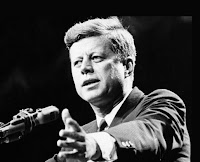

His parents were very ambitious about their nine children, of whom John was the second. Most of his education was obtained from private institutions, including Choate Prep School in Wallingford, Princeton University and lastly Harvard University in 1936. He majored in Political Science at Harvard where he wrote an honors thesis on British foreign policies in the 1930’s and graduated from there in 1940. Soon after, he published his thesis under the title ‘Why England Slept’ which was his first published book.

A year later in 1941, right when America entered World War II, Kennedy joined the United States Navy and became an intelligence officer. He was given command of PT-109. His heroic performance in rescuing his crew that was sunk by the Japanese in 1943 in the Pacific did strengthen his position but it worsened an old back injury he had, also causing him to have malaria.  He received the Purple Heart and Navy and Marine Corps Medal and was hailed for his heroism. After he recovered, he was promoted to the rank of lieutenant where he became a PT instructor in Florida. However, his back injury caused him to return to civilian life and he was discharged in early 1945 where he started working for the next one year as a journalist covering the UN conference in San Francisco and the 1945 General Election in Britain.

John F. Kennedy was a member of the Democratic Party. In 1946, he ran successfully for a seat in the House of Representatives where for the next two years, Kennedy remained a loyal supporter of Harry S. Truman’s foreign policies. Though he condemned what he thought was the administration’s weak stand against the Communist Chinese. Kennedy maintained a strong anti-communist foreign policy throughout his career. He challenged Republican Senator Henry Cabot Lodge, Jr. in 1952. Although it was Dwight D. Eisenhower, also a republican, who won in Massachusetts and the entire country as a whole, Kennedy managed to defeat Lodge in their votes.

In 1951, Kennedy visited Middle East, Pakistan, India, Indochina, Malaya and Korea. As a democrat, he was against colonial empires and he even urged France to give up on Algeria. He also advocated increased financial aid to underdeveloped countries. Kennedy was elected to the Senate in 1952. Shortly in the following year, he married Jacqueline Bouvier, the daughter of a New York City financier.

He continued to have back problems and even underwent two operations in 1954 and 1955. It was mainly due to his back ailments that he was unable to play an important role in the government at that time. During his recovery time in the hospital in 1956, he wrote a book based on biographical studies of American political heroes titled ‘Profiles in Courage’ that won the Pulitzer Prize in 1957. Both of his books revealed his admiration for dynamic political figures. He had four children with Jacqueline out of whom, only two survived infancy; Caroline and John F. Kennedy, Jr.

Being a congressman, he supported social legislation that favored the working class and was a firm advocate of social welfare and civil rights legislation in the Senate. Additionally, he sponsored bills for providing Federal Financial aid to education and relaxing United States immigration laws as well as a way that needed complete disclosure of all employee pension and welfare funds.

By 1960, Kennedy was an aspirant for the Democratic Party’s presidential nomination. As a result of his highly organized and well-financed campaigns, he won democratic primaries in Wisconsin, Indiana, Oregon, Ohio, Maryland, Hampshire, Nebraska and West Virginia. Having been a northerner and a Roman Catholic, Kennedy knew his strength was little in the South and hence chose Lyndon B. Johnson of Texas as his running mate. At the national convention in July 1960, he was nominated on his first ballot; defeating Lyndon B. Johnson. Kennedy also participated in a series of debates on television with his Republican rival, Vice President Richard M. Nixon where he performed well; assuring better defense policies and progressive welfare and civil rights programs.

At the age of 43, Kennedy was the second youngest president of the United States, where Theodore Roosevelt beat him to it by being one year younger in 1901. Kennedy won the election by a very narrow margin as he was short of majorities in Congress. His candidacy, though, was controversial because United States had not had a Roman Catholic President before. It was reckoned that the defeat of Al Smith against a Republican candidate in 1928 had been for his religious orientation and now Kennedy was a Roman Catholic candidate, too. Although, Richard Nixon had served for eight years as Vice President under Dwight Eisenhower and he belonged to a Republican Party, Kennedy still won by 34,226,925 votes to 34,108,662 despite being lesser in experience as compared to Richard Nixon (Helms, 2003). He successfully tackled the issue of religious bigotry in the US government in his speech in Houston on September 11, 1960 where speaking against religious intolerance, he also emphasized the importance of distinction between the Church and State.

While campaigning for the elections, Kennedy often used Cuba, a clear threat of communism at the time, as an example of the Republicans’ weakness against communism stating how Cuba was only ninety miles away from USA (Mahoney). Kennedy seemed to be clearly competing with the Republicans by challenging them to take the strongest action against the new Cuban government when he called for the United States to strengthen the non-Batista democratic anti-Castro forces in exile as well as Cuba to totally overthrow Castro’s government. He emphasized how these anti-Castro forces were still not yet backed by the United States Government as they should be (Wofford).

It is interesting to note that the leadership of Central Intelligence Agency under Allen Dulles slightly preferred Kennedy over Richard Nixon in his 1960 presidential campaign where the possibility arises that the CIA director could have been leaking information to Kennedy through a man named Stuart Symington. As a result of which the Democrats had a reason to blame the Eisenhower Government for causing the ‘missile gap’ between the Soviets and the United States.

John F. Kennedy’s speeches during his presidential campaign proposed new vigor and expectations in the citizens of the United States. During his inaugural address on the 20th of January, 1961, Kennedy challenged the Americans through his famous statement, “Ask not what your country can do for you - - ask what you can do for your country”. Though this statement was inspiring, it held connotations of United States’ possible confrontations with the USSR. In the same speech, he exhorted the American youth to assist the underdeveloped countries of the world. He declared the establishment of a scheme called the Peace Corps that intended to help Africa, Asia and Latin America by the help of 10,000 young Americans. He believed such a person to person program would help build trust, good will and self-help in the undeveloped world.

In the same speech, Kennedy clearly showed his support for Eisenhower’s policy of holding up the South Vietnamese Government of Ngo Dinh Diem stating his famous Domino Theory. He stressed that if South Vietnam became a communist state, the rest of the non-communist world would be in danger of communism as Laos, Cambodia, Burma, Philippines, New Zealand and Australia would follow in its footsteps by also falling prey to communism. Thus, it is important that communism is brought to an end in Vietnam. He encouraged America to be willing to “pay any price, bear any burden, meet any hardship, support any friend, oppose any foe to assure the survival and success of liberty”. His inspiring rhetoric left a substantial impact on the American youth where many were inspired to join the US Marines as they claimed Kennedy had awakened the missionary idealism in them against communism.

After Kennedy replaced Dwight Eisenhower as the President of the United States, he was informed of the CIA plan to exercise an amphibious assault on Cuba. Kennedy acted on his anti-communism regime by agreeing to the Bay of Pigs invasion as he did not want to seem soft on communism if he refused permission to continue the invasion plan. Also, he was assured by his advisors that since Fidel Castro did not enjoy so much popularity in Cuba and once Cuba got invaded, the Cuban people would rather support the CIA’s trained forces. Though the Bay of Pigs attack, on April 14, 1961 was a total failure, where B-26 planes bombed some of Cuba’s airfields, but were ultimately shot down, the troops captured or killed; Kennedy readily took the entire blame for its failure. It is said that Kennedy secretly vowed to himself after the failure of the Bay of Pigs invasion to overthrow Fidel Castro by all means. Soon, Kennedy recruited Edward Lansdale, a well-known cold war disciplinarian to devise a strategy to crush the government of Castro in Cuba.

After the failure of the Bay of Pigs, Kennedy became distrustful of the CIA. It was not that he thought the invasion was immoral but that it was an “amateur operation”. Kennedy really wanted to be seen as a “Cold War Warrior” who was not soft on communism at all. As a result, he and his brother, Robert Kennedy, got involved in covert action and increased military effort to remove Castro’s government in Cuba and make sure to win in Vietnam.
Kennedy is well known in the international history due to the famous Cuban Missile Crisis which started in September 1962, when USA’s U-2 spy planes discovered surface-to-air missile (SAM) launch sites built by the Soviet Union in Cuba. Added to the suspicions of the US government was the increased number of Soviet ships arriving in Cuba which posed a threat of possible existence of offensive weapons also kept in Cuba by the Soviets. At this point, President Kennedy expressed concern to the Soviet Union about these developments and emphasized that United States would not tolerate the keeping of any offensive weapons in Cuba by the Soviets.

The situation had become very difficult for Kennedy as the elections were nearing and the SAM installations in Cuba by the Soviets meant that they could easily shoot down USA’s U-2 spy planes which would weaken Kennedy’s position as a President. Also, since his election in the government two years ago, the Republicans and southern Democrats in congress were constantly bent on creating hurdles for Kennedy in his proposed legislation which demonstrated how little support he had in Congress. His ratings had fallen considerably low ever since he was appointed as the president as over 62% of the population was unhappy with his policies regarding Cuba. As a result, Kennedy feared that any occurrence of trouble in the Cuba’s situation now would cost his Democratic Party to lose more votes since the Bay of Pigs failure had just recently happened at his hands. Not surprisingly, the Republicans were highlighting the issue of Cuba more in their campaign to weaken Kennedy’s position.

When photographs taken by USA’s U-2 spy planes revealed in October, 1962, that the Soviet Union was indeed placing long range missiles in Cuba, President Kennedy’s first response was to call a meeting to discuss what can be done. The group that attended the meetings over the next few days came to be known as the Executive Committee of the National Security Council. The general advice by the CIA and other military advisors in the Ex-Comm seemed to be in favor of an air-attack on the missile sites in Cuba. However, Kennedy wanted to wait as CIA’s poor advice in the Bay of Pigs invasion had led to a failure.

The committee was not able to agree on a single solution for a few days until a naval blockade, which Kennedy would propose to the world as “quarantine”, posed as a suitable solution to avoid any nuclear war with the USSR. Kennedy was prudent enough to tell the air-force to prepare for attacks on Cuba and the Soviet Union, in case the need arose whereby the army positioned 125,000 men in Florida waiting for his orders to invade Cuba. The world knew a nuclear war was to be expected if the Soviets’ ships did not comply with Kennedy’s demand to turn back if they contained nuclear weapons or if they refuse to be searched. Kennedy also assured the military advisors that in case an American U-2 spy plane is attacked, he would order for an attack on the Cuban missile sites right away.

On October 24, 1962, President Kennedy was notified that the Soviet ships had just stopped and turned back before they reached the United States ships that were blockading Cuba. Shortly, Kennedy received an angry letter from Nikita Khrushchev accusing him of to have created this crisis to favor his Democratic Party in the upcoming elections. Soon, Khrushchev proposed that Soviet Union would remove the missiles in Cuba in exchange for a guarantee that USA would not invade Cuba and also remove their nuclear bases in Turkey. Shortly, an American U-2 plane was shot down whereby the military Advisors in Ex-Comm started reminding Kennedy of his promise to invade Cuba in case of such a scenario. To avoid a nuclear confrontation, Kennedy instead sent a letter to Khrushchev agreeing to refrain from invading Cuba if Soviets remove their missiles from Cuba. He also agreed to remove the US missiles from Turkey within six months but the deal was not to be publically announced. Khrushchev obliged and soon the elections were held where Kennedy’s supporters increased in Congress due to his success in avoiding a nuclear confrontation in the Cuban Missile crisis.

This was the only time in history that the United States and the Soviet Union had come so close to a nuclear war. After this, both the sides tried to improve their relations. However, Kennedy was still bent on supporting the South Vietnam’s government to prevent it from becoming a communist state. Although, President Charles De Gaulle of France admonished him that involvement in the Vietnam War would trap the United States in “bottomless military and political swamp”, Kennedy still delivered the leader of the South Vietnamese government, Ngo Dinh Diem, money needed to increase his army from 150,000 to 170,000. This was because Kennedy had to show himself as being firm on communism and his Domino theory, that the Hawks in the Congress were fully supporting, stated communism needed to be contained as soon as possible. His military advisors also assured him that United States was militarily equipped enough to prevent National Liberation Front’s victory in South Vietnam.

Another reason was that Kennedy had to prove he meant it when he claimed that: “No other challenge is more deserving of our effort and energy. Our security may be lost piece by piece, country by country.” A hundred military advisors, later increased to 12,000, were sent to Vietnam to help train the South Vietnamese Army; though this was kept secret from the American public as it violated the terms of the Geneva Agreement.

During his time in 1962, the Strategic Hamlet programme was introduced. This ended up increasing NLF’s supporters and increased the peasants’ hostility towards the Ngo Dinh Diem’s government as the South Vietnamese Army had to apply force to move the peasants into new villages that were under the control of the South Vietnamese Army. Many of the peasants did not want to move due to their ancestral and religious affiliations with where they lived and the way things were going, Kennedy was getting worried. Despite the Strategic Hamlet programme, the membership of National Liberation Front had grown to over 17,000 members, controlling 1/5th of the villages in South Vietnam. Using this, South Vietnamese government pressurized Kennedy to supply more military help.

Also at the time, Kennedy was receiving little support for his bill regarding provision of health coverage for individuals over 65 of age called Medicare. In his presidential election campaign in 1960, Kennedy had fought for a new Civil Rights act that earned him 70% of the African American votes. His civil rights bill was presented in Congress in 1963, following which he gave a speech on television in June of 1963. In his speech, Kennedy stated that, “the Negro baby born in America today, regardless of the section of the nation in which he is born, has about one-half as much chance of completing college; one third as much chance of becoming a professional man; twice as much chance of becoming unemployed; about one-seventh as much chance of earning &10,000 a year; a life expectancy which is seven years shorter’ and the prospects of earning only half as much.”

Several civil rights violations and similar events including some Buddhist monks’ suicides, Diem’s government’s indifference to them and mass arrest of the monks led Kennedy to the belief that Ngo Ding Diem hardly seemed to be capable of uniting the South Vietnamese against communism. Soon in the events that followed in Vietnam, Kennedy started to have serious doubts about his Vietnam policy and wished to withdraw.

Shortly thereafter, in June 1963, Kennedy gave a speech at the American University where he emphasized peace keeping as far as the Cold war was concerned, stating, “Today the expenditure of billions of dollars every year on weapons acquired for the purpose of making sure we never need them is essential to the keeping of peace. But surely the acquisition of such idle stockpiles - which can only destroy and never create - is not the only, much less the most efficient, means of assuring peace”. He went on to say, “Some say that it is useless to speak of peace or world law or world disarmament, and that it will be useless until the leaders of the Soviet Union adopt a more enlightened attitude. I hope they do. I believe we can help them do it. But I also believe that we must reexamine our own attitudes, as individuals and as a Nation, for our attitude is as essential as theirs.” This does not mean the Cold war was over. In fact, in many ways, Kennedy remained a Cold Warrior where his policy of sabotage against Cuba was concerned which clearly was against the vision he had been talking about in his American University address (Douglass).

Kennedy and his advisors were already preparing for the next presidential campaign by Fall of 1963. Although, he had not yet formally announced his candidacy, it was obvious he was going to run for elections and his chances for re-election seemed good. Five months later on 22nd November, 1963, President John F. Kennedy was to arrive in Dallas accompanied by his party, wife, Vice President Lyndon B. Johnson, Governor John Connally and Senator Ralph Yarborough in a procession of cars. There were several others including guards in the cars and motorcycles that surrounded the procession for security. Despite all this security, at about 12:30 P.M the President’s limousine was hit with bullets causing Kennedy injuries in the head and left shoulder. Though, the limousine accelerated right after the shots to Parkland Memorial Hospital where Connally who had also received a bullet in the back was admitted along with the President, the President’s injuries turned out to be more serious causing his death within half an hour.

John F. Kennedy was declared dead at 1 P.M due to a massive wound to the head. The suspect was arrested within two hours of the killing whose name was Lee Harvey Oswald. Although, throughout the time he was in custody, Oswald insisted he was not involved in the assassination, he was shot dead by Jack Ruby after two days. These conclusions were at first supported by the American public but soon public polls revealed that majority of Americans thought it could have been a conspiracy and it was definitely a plot to cover up the real culprits in the assassination.

Monday, 10 October 2011

Male Domination & Violence Against Women from the Eyes of a Female


Violence against women is a violation of their right to life, security, happiness and freedom. It is an exploitation of a woman’s weakness to defend herself as a consequence of her physical incompetence or her economic dependence on men. It is a bitter reminder for females to forego their delusions of an egalitarian world based on liberty, independence and equality. Men are superior and women will remain inferior. Their attempts at independence will be dissolved by physical or verbal violence if they dare. Violence against females is the men’s assertion that the former’s destiny lies in their subordination to men. 

In our patriarchal society, it is considered a man’s sole prerogative, even fallaciously perceived as a decree of the Divine Law, to exercise unchecked economic and political tyranny over his female subordinates. Such belief systems have perpetuated gender disparities in all spheres of our society where the central relationship between man and woman essentially bases on the male’s exploitation of the female’s physical vulnerabilities. With the growth of globalization in recent decades, even though Pakistan has significantly transformed in political, social, economic and technological spheres, the appalling practice of violence against women has not deterred. As women have ventured out of their homes to acquire education, employment, and other needs, they are exposed to greater forms of oppression and brutality than just domestic violence, stalking, cyber bullying or emotional abuse. They have become prime subjects to human trafficking, workplace violence, sexual assaults, and most importantly, acid attacks and defacing. And for what crime?

The only effective way violence can be precluded from our society is by devising an appropriate public policy that ensures women’s equal empowerment through education, self-defense training and employment as well as through men’s legal accountability. There needs to be a proper law enforcement infrastructure, such as a network of governmental agencies in collaboration with the local police and lawyers in all communities, which undertakes the implementation of such laws at the grassroots level. As part of their compulsory education, all females should be taught techniques of self-defense, not only as a preventive measure for prospective assailants but also to equip women with independent security.

Additionally, through sustained communication via mobile phones and regular meetings, women can report any incidence of blackmailing, domestic or workplace violence to these agencies which will then execute the suitable course of action and penalize the perpetrators. Not just prevention, agencies should also mobilize and educate men through community programs as well as public messages in the local media and the internet to restrain themselves and others from physical and verbal violence against women. These public messages should also inculcate upon both sexes the positive consequences of gender solidarity with mutual understanding, humanity, and peace. Only then can we stop the reiteration of violence and hope for a peaceful society.

Surely, widespread violence against women has been a centuries-old way of men’s unilateral hegemony over women, which requires extensive measures, such as mentioned above, to fully eliminate. Moreover, this gruesome practice must be curbed if Pakistan is to prosper as a peaceful and democratic state whose female citizens fully benefit from its socio-politico-economic privileges.